Expert labels
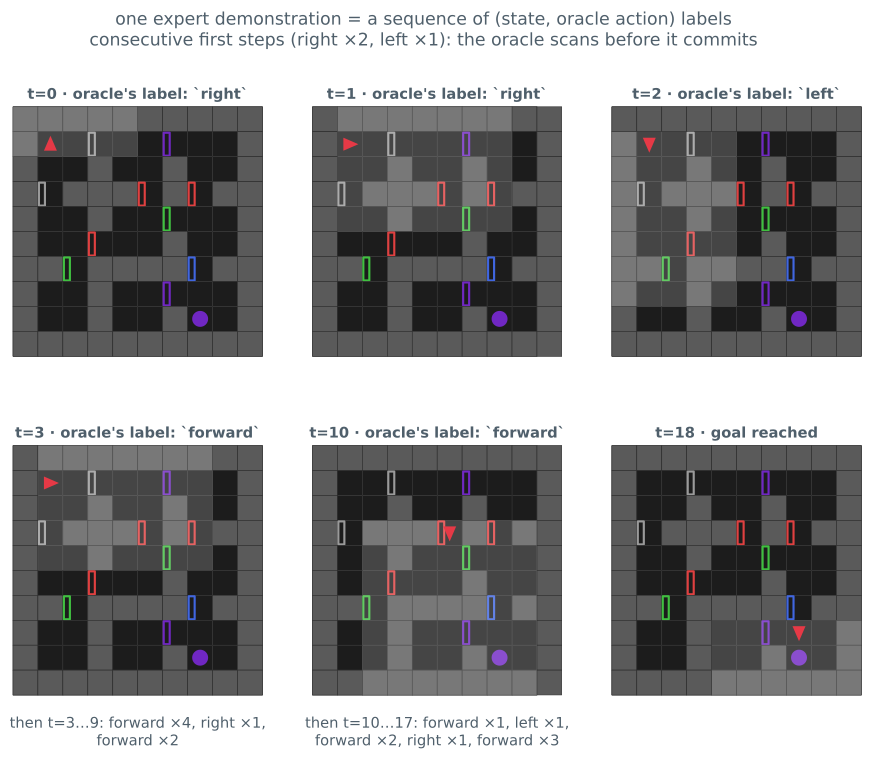
An expert label says which action to take in one situation. A demonstration collects those labels along a route chosen by the expert.
What makes this expert useful?
On the same mazes, random actions succeed in of episodes, wall following in , and the expert in . Reliable task performance makes this expert a useful teacher.
How the expert chooses an action
The expert is BabyAIBot, MiniGrid’s scripted planner. It uses simulator information to plan a route. The learner must predict its advice from a partial observation.
The expert can show its own route or advise the learner where it has arrived. The label means the same thing: take this action. What changes is which situations get labelled.
Can the expert help after a wrong turn?
After a wrong turn, the simulator reports what actually happened so the expert can replan. In test scenarios, the expert reaches the target in of episodes.
What the extra checks tested
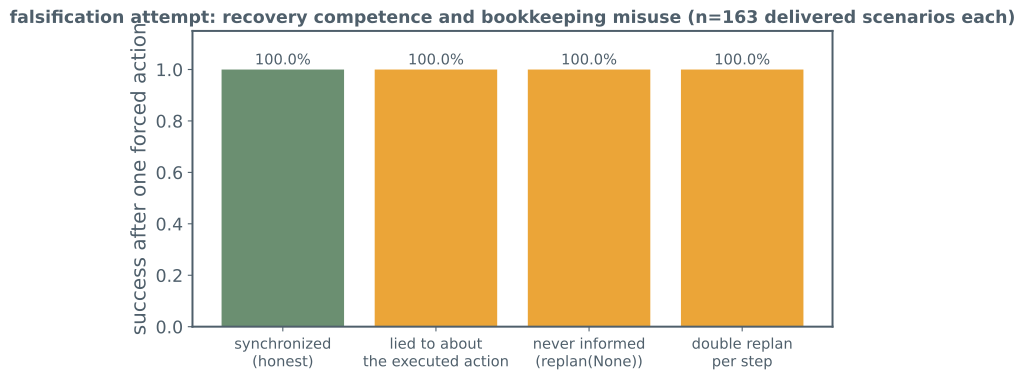
The lab also tested wrong action reports, skipped reports, and repeated planner calls. All four versions succeeded here. Other tasks may depend more on reporting actions correctly.
From advice to training data
The choice behind the study
With limited labels, should we follow the expert’s route or the learner’s? Next, we see how the network learns from these examples.