Robot learning · real-time control
Recover in Real Time
How do recovery-focused data and delay-aware execution combine on real hardware?
- Role
- Assembled and calibrated the leader–follower arm pair, built the teleoperation and diagnostics workflow, and designed the planned 2×2 study of recovery data and delay-aware execution.
- Methods
- Robot assembly & calibration · Leader–follower teleoperation · Imitation-learning tooling (LeRobot ecosystem) · Latency-aware execution design

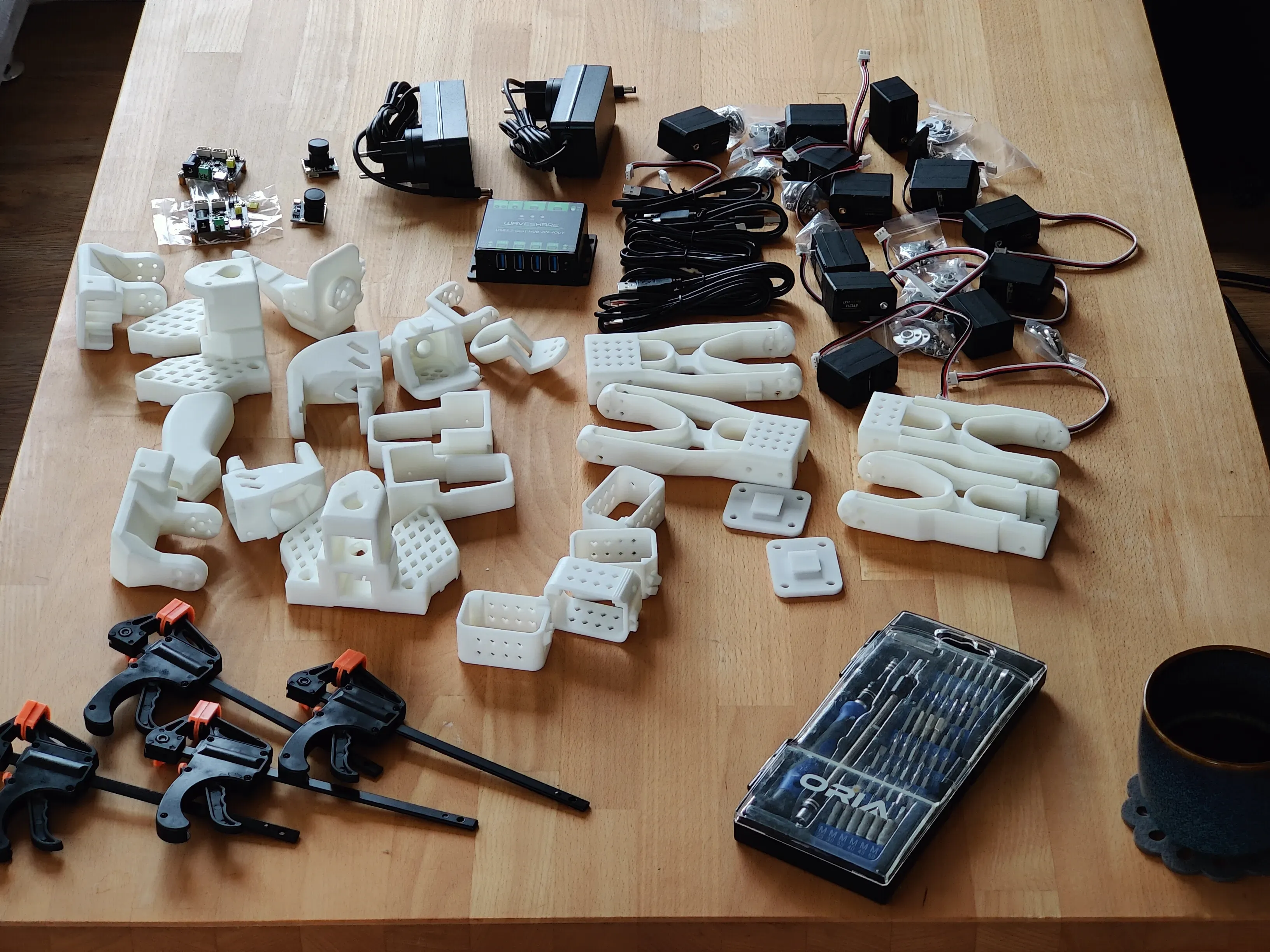
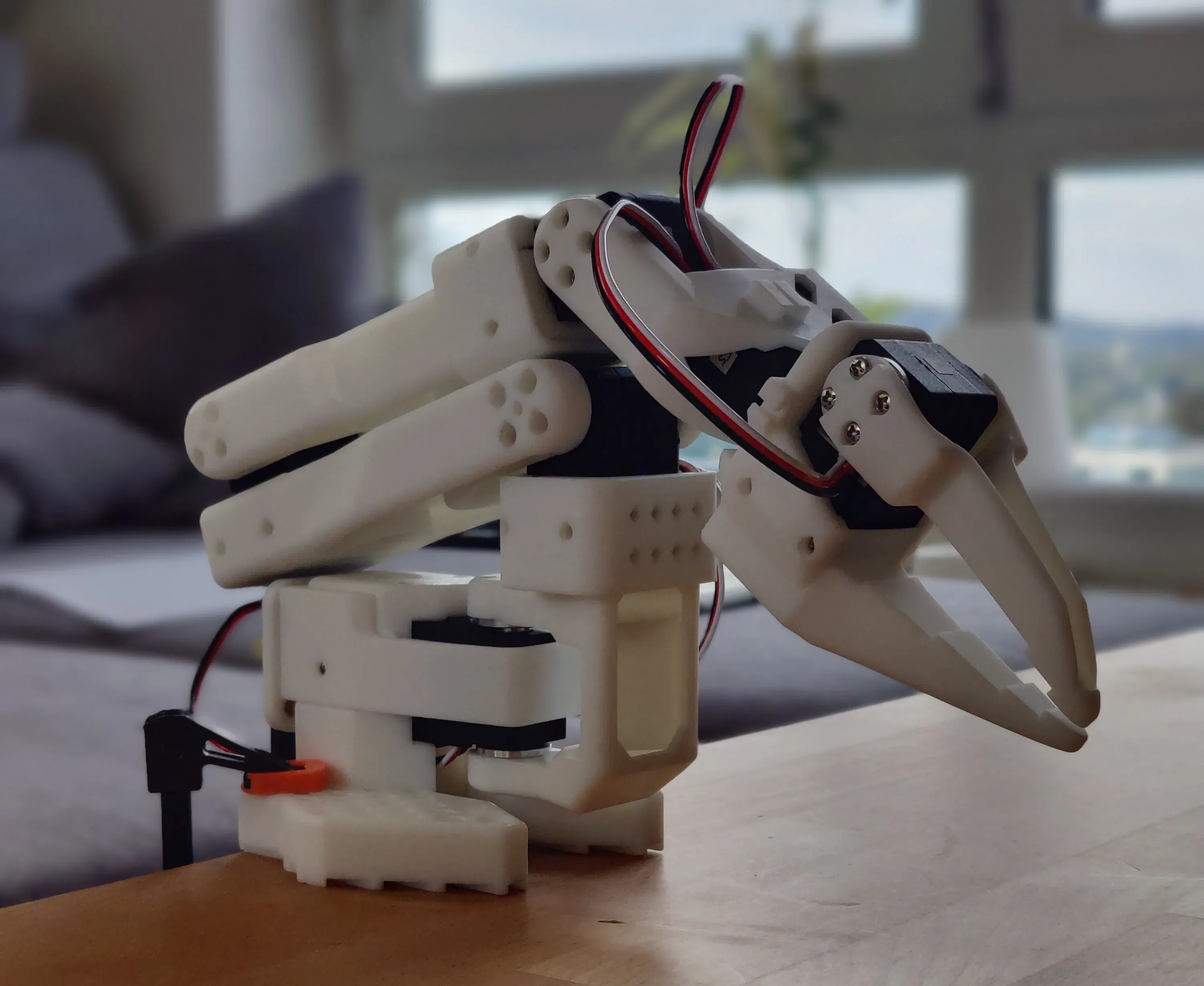
Recover in Real Time is the hardware end of the current robot-learning work: a leader–follower arm pair built from a printed kit, wired, calibrated, and instrumented for recorded teleoperation. The photographs show the platform as it actually exists, from the parts on the table to the labelled servo bus boards that keep the two arms addressable.
What runs today is teleoperation and diagnostics. Both arms move under direct human control, and episodes are recorded end to end. The camera is not set up yet. Next come the arena and the external servo, and after that camera and task qualification. The study the platform was built for is a controlled comparison between recovery-focused data and delay-aware execution: designed, preregistered, and not yet run. No policy has been trained, and no timing or robustness number exists to report.
The build runs in parallel with Grounded Recovery and Residual Worlds. Those two projects settle the foundations first, recovery data in one and learned dynamics in the other, so the hardware study can rest on results that are already understood.
Figures
Method and evidence material

Printed parts and electronics, laid out before assembly.

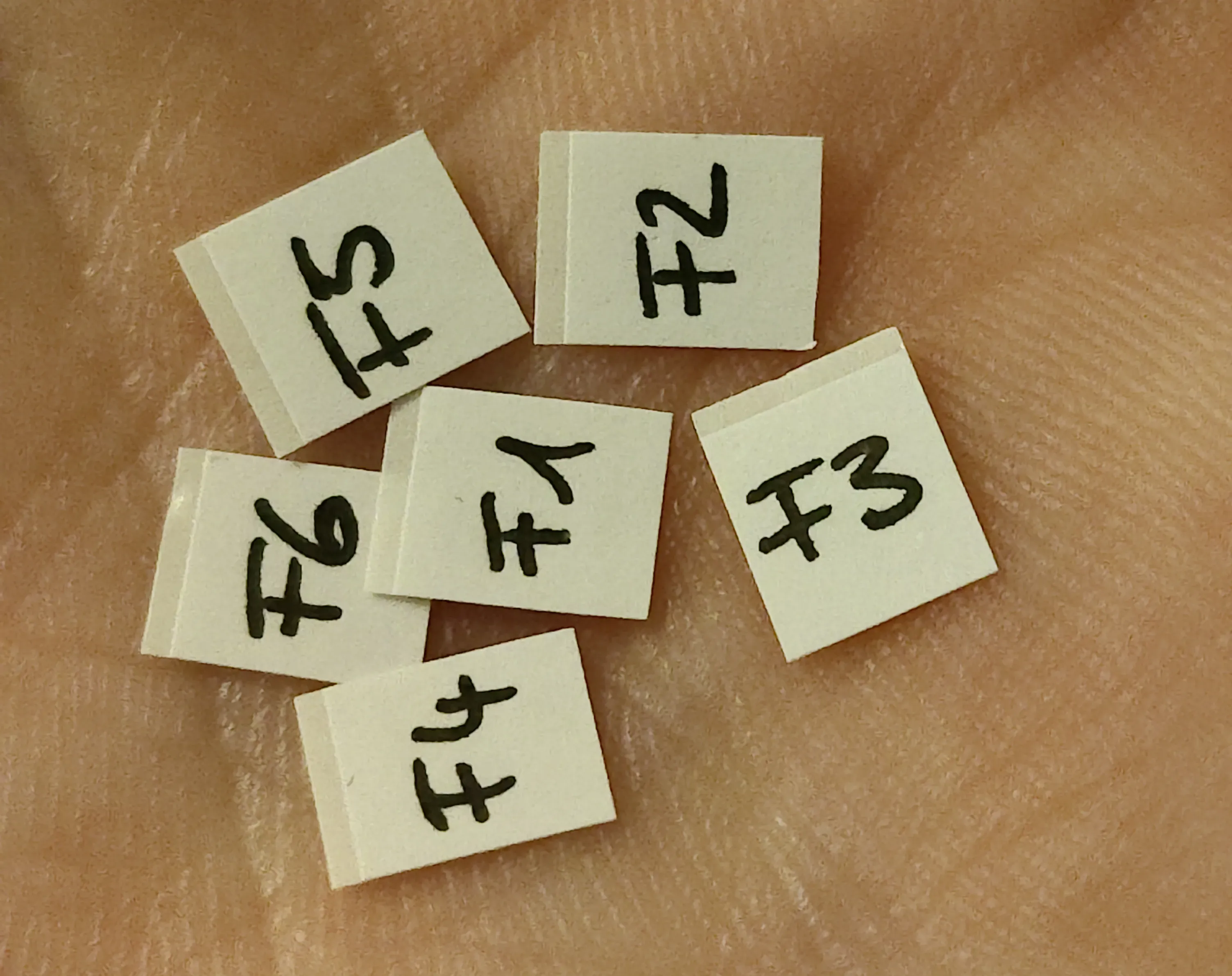
Hand-written joint labels, F1 to F6, for the follower arm.

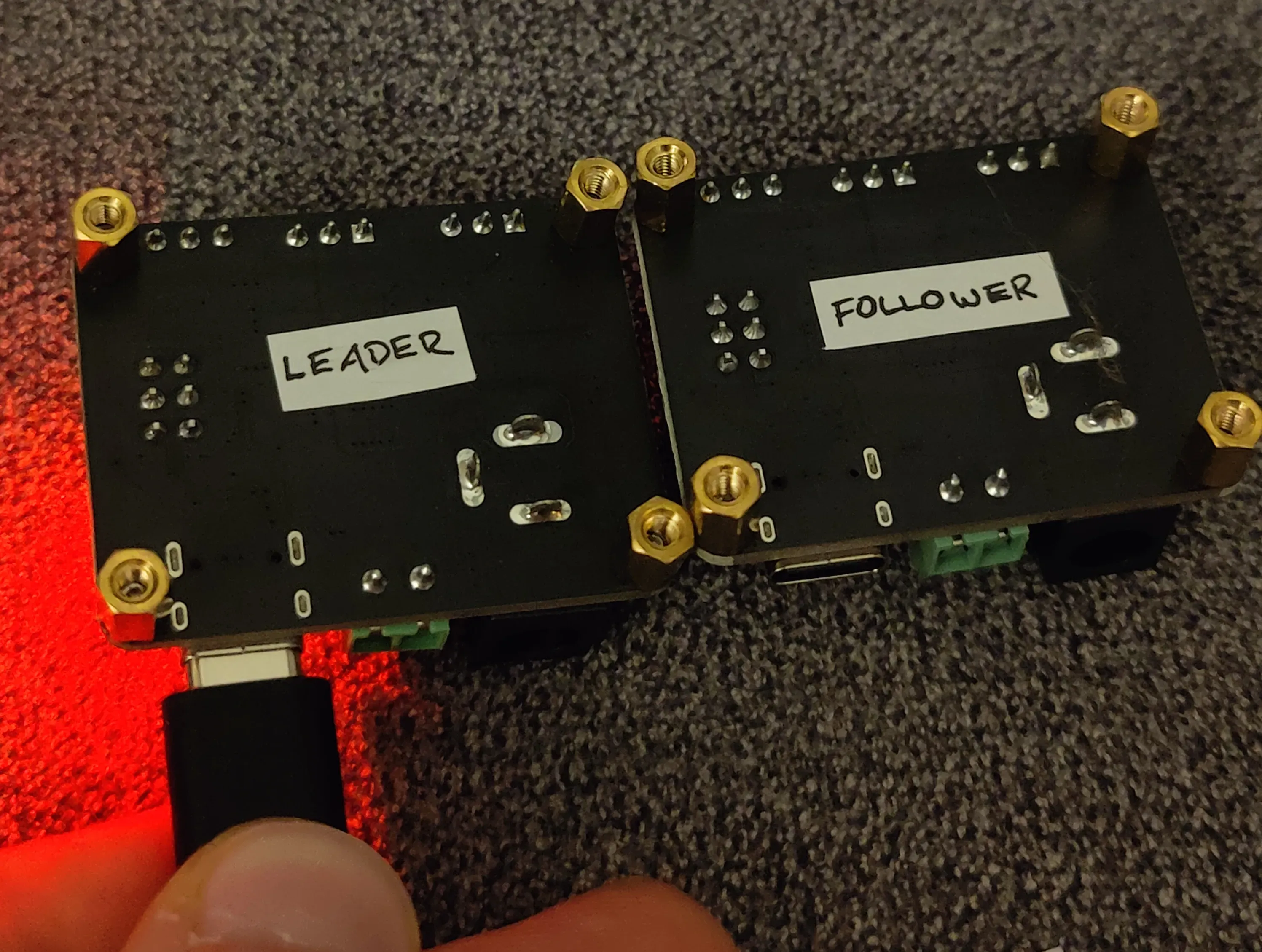
The two servo bus boards, labelled so the arms cannot be swapped by accident.
Registered claims and measurements
A Waveshare SO-ARM101 SE leader–follower pair is assembled and calibrated; teleoperation has been demonstrated under the recorded conditions. The autonomous recovery-and-delay study is pending.
Assembly and calibration status only. "Hardware-qualified" wording requires the dated qualification protocol and measurement receipts.
All current robot media show the assembled platform under leader–follower teleoperation; none of it is autonomous execution.
Context
Primary references
- Zhao et al. (2023): Learning fine-grained bimanual manipulation with low-cost hardware (ACT)
- Ross, Gordon & Bagnell (2011): DAgger: reduction of imitation learning to no-regret online learning
- Ramstedt & Pal (2019): Real-time reinforcement learning: acting under one-step delay
- Cadene et al.: LeRobot (open-source robot learning tooling)
Novelty scope: Teleoperation, ACT-style imitation learning, and delay-compensated execution are established techniques. The planned contribution is a controlled 2×2 study of recovery data and delay-aware execution on accessible hardware; no autonomous result exists yet, and none is claimed.